Fibre optics · across Germany
Fibre-optic services for businesses: install, splice, test, repair – across Germany
We install, splice, test and repair fibre for property managers, commercial buildings, electrical contractors and network build-out, with our own splicing and test equipment, a team of independent specialists and one contact from enquiry to handover. Every fibre gets a test report for acceptance. The initial consultation is free. We state the amount in the quote; for splicing it depends on fibre type and fibre count.
Technically reviewed by M. Ahmed – 13 years of professional experience
Services
Our fibre services
Five services, one contact. Book one on its own or several together.
Fibre inside buildings
Fibre from the basement to every flat or tenant unit.
- Cabling in stairwells and risers
- Splicing, distribution frames and outlets
- A test report for every fibre, for your files
Fibre splicing and repair
Join fibres permanently, fill a distribution frame, bring a damaged cable back into service.
- Fusion splicing on our own machine, single-mode and multimode
- Pigtails, splice boxes and distribution frames
- Repair after a cable break, with a test afterwards
Fibre testing (OTDR)
Measure a link, locate a fault, document acceptance.
- OTDR and loss measurement, multimode too (850/1300 nm)
- A report per fibre, also for links others built
- Fault location after a failure or cable damage
Subcontractor for build-out and electrical firms
Splicing capacity for network operators, civil-works firms, electrical contractors and system integrators.
- Splicing and testing in FTTH build-out
- Our own equipment, reports go to you
- Invoiced as a subcontractor, deployed by arrangement
Fibre in a private house
From the house connection to the room: fit the outlet, extend the line, connect the router.
- Fibre from the house connection to the outlet in the living space
- Splicing and connection to the router
- A check that light arrives at the far end
Our own equipment
Fusion splicerSplicing by electric arc
OTDRFault location, every splice on its own
Power meter and light sourceLoss measurement of the link
Inspection microscopeChecking connector end faces
Why us
Why companies give us their fibre work
Our own equipmentWe own the fusion splicer, OTDR, power meter with light source and inspection microscope. Nobody has to bring anything.
A report per fibreYou get the measured values in writing and can show your client what was accepted.
One contactFrom enquiry to handover you talk to one person, even when several specialists are on site.
Across Germany, by appointmentWe come to you, by arrangement and planned by urgency. You get a reply the same working day.
Payment after handoverYou pay once the work has been handed over: SEPA transfer, invoice or PayPal.
Free initial consultationWe clarify what is needed by phone or message before you receive a quote.
Pictures from the splicer
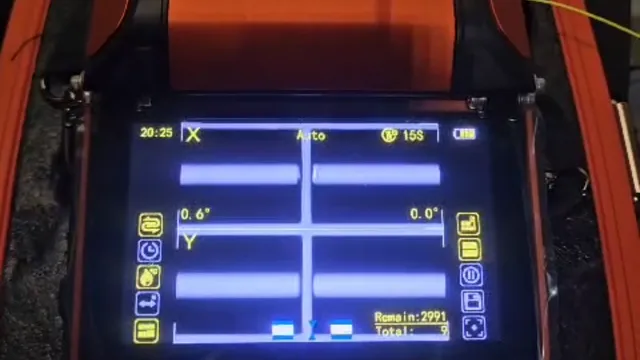
Fibres aligned in the splicer 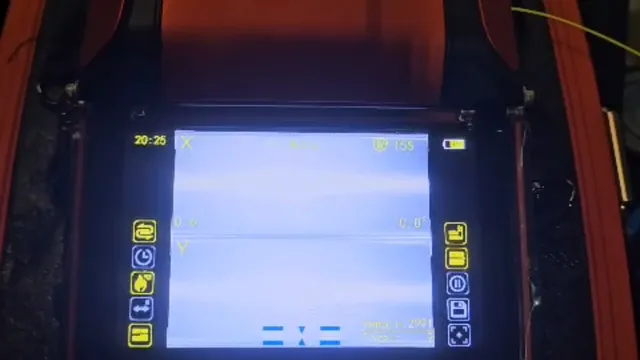
Display during the arc 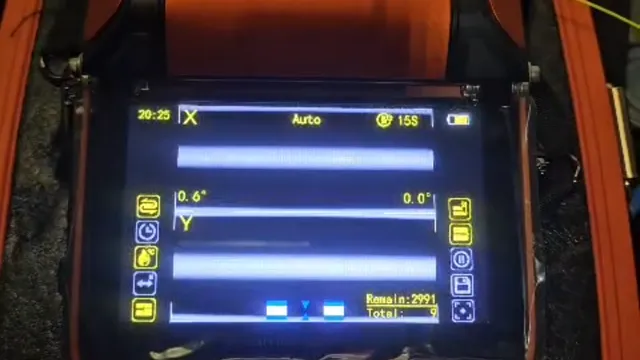
Fibre image before the splice
Installation and repair
Fibre outlets, splice boxes and rack-mount trays: installation and repair
Not every fibre job is a splice. Often the trouble sits where the fibre ends: a loose outlet, a crowded tray, or a distribution frame where nobody knows any more what belongs where. We fit it, replace it and tidy it up.
Faceplates and wall outlets
Fit, move or replace fibre outlets and subscriber outlets when they are loose, broken or in the wrong place.
19-inch trays
Install, populate and replace rack-mount splice trays and pull-out splice drawers when one fails.
Wall boxes and splice boxes
Small wall-mount distribution boxes for buildings without a rack: mount, lay the fibres, close.
Cassettes and fibre management
The flat trays that hold the splices, plus bend-radius protection, cable clamping and strain relief, so fibres are neither kinked nor pulled.
Couplers and adapter plates
Fit couplers and populate or replace adapter plates when a port is damaged or wrongly assigned.
Pigtails and patch cords
Replace damaged pigtails and patch cords so the connection carries light cleanly again.
Labelling and tidying
Put a grown fibre frame in order: route the fibres cleanly and label the ports so the next technician finds what they need at once.
Repairing outlets and trays
Repair broken or loose outlets and trays instead of rebuilding the whole installation.
The splices themselves: have fibre splicedThe cabinet around it: server rack and patch panel
Orientation
Which fibre service do I need?
Describe your situation and we name the right service. Not sure? Send us a few lines and we will sort it out.
- The fibre ends in the basement and has to reach the flats or offices.In-building fibre
- A cable is torn, kinked or was hit by a digger.Have fibre repaired
- A new distribution frame is waiting for its fibres.Have fibre spliced
- A link has to be accepted, or the connection is poor.Fibre testing (OTDR)
- You are an electrical or civil-works firm without a splicer.Subcontractor for fibre
- An outlet wobbles, a tray is broken or the frame is unreadable.Installation and repair
- It is about your own house.Fibre in a private house
Process
How does a fibre project run?
Clarify what exists
Which cables are there, where does the operator’s line end, which routes are free? A photo is enough for a first view.
Install
The cable goes in place, inside the building from the entry point to the unit.
In-building fibreSplice
The fibres are joined and laid in the distribution frame.
SplicingTest and accept
Every fibre is measured and the values go into the report.
Fibre testingDocument
Labelled ports and a report you can work with later.
Repair later
If something is damaged: measure, splice, measure again.
Repair
Who does what? The network operator brings its line into the building. Everything behind that point, the routes to the flats and offices, belongs to the owner. That is where we work; in network build-out we work for the operator or its contractor instead. Explained in full on the in-building fibre page.
Who it is for
Who we do fibre for
Property managers, owners’ associations and landlords
You want fibre to reach every unit and need records that hold up in a dispute or a sale.
Fibre in an apartment buildingBusinesses and offices
Surgery, law firm or office block: links between floors and buildings, cleanly terminated and tested.
Fibre in a commercial buildingNetwork operators and civil works in build-out
Splicing and testing capacity in FTTH build-out, deployed as a subcontractor.
Subcontractor in fibre build-outData centres and industry
Fibre in data centres and on industrial sites: splice, test, find faults.
Fibre testing for sitesElectrical firms and system integrators
You install the cable, we splice and test. The reports come to you, and you pass them on to your client.
Splicing for electrical firmsPrivate households
House connection, outlet and router: a case for the private page.
Fibre at home
Market
Why now: the fibre is in the street, but not in the building
The build-out is moving. Inside buildings, though, the fibre is often still missing.
- 28.7m (62.0 %)
- units with fibre in the street (Homes Passed)
- 13.8m (29.8 %)
- units with fibre into the building (Homes Connected)
Status 30 June 2026 according to the BREKO market analysis 2026, based on 46.2 million residential and business units. The difference between the two figures is about 15 million units by our calculation: the cable lies in the street, but inside the building the route to the door is missing.
The end of the copper network matters too. On 19 January 2026 the Federal Network Agency presented a regulatory concept for migrating from copper to fibre. Copper is meant to end region by region once fibre covers a region almost completely. There is no nationwide date.
A change to the German Telecommunications Act is also planned. It is not in force yet; we will report on it only once it has been promulgated.
Sources
Questions
Questions before you order
What does a fibre project cost, and what does it depend on?
Mostly on the number of fibres and units, the routes inside the building, access and material. We name no flat rates in advance because every building is different. The quote states labour, material and travel, and for splicing it depends on fibre type and fibre count. We state the amount in the quote. The initial consultation is free.
What do you need from us for a quote?
Tell us where it is and what should happen. A few photos of the frame or cable, any plans and the number of units or fibres help. If something is missing, we ask. You get a reply the same working day.
When can the work start?
We work by appointment and plan by urgency: what is pressing comes first. How fast it can be depends on the job and is agreed in the quote.
Copper or fibre: what pays off in a company?
For short runs in a room or on one floor, copper cable is usually enough; the standard assumes up to 90 metres for a fixed link. Fibre pays off for links between buildings, longer runs and where bandwidth is going to grow. We build the copper part too, on the structured cabling page.
Do you also work for network operators and civil-works firms?
Yes, as a subcontractor: we supply splicing and testing capacity for the build-out. How the cooperation works is on the subcontractor page.
Do you also install fibre outlets and splice boxes?
Yes. We fit fibre outlets, wall boxes, splice boxes and 19-inch trays, replace broken or loose parts and populate couplers, adapter plates and pigtails. Fibre routing and strain relief are part of it. If you are not sure what you have, send us a photo.
Can you tidy and label a messy fibre distribution frame?
Yes. We route the fibres cleanly, add strain relief and bend-radius protection where they are missing, and label the ports. Afterwards you and the next technician can see at once which fibre goes where. If fibres have to be spliced anew, we test the result afterwards.
Can I book just one service?
Yes. Some customers only want a test, others only splicing or a single outlet replaced. The services fit together but can be booked on their own.
Enquiry about Fibre
- Free initial consultation
- Reply the same working day
- Work by appointment
- across Germany
What to send us for a quote
- Location and type of building (apartment building, commercial, industrial site)
- What should happen: install, splice, test, repair
- Number of units or fibres, as far as known
- Photos of the frame, outlets or the damaged cable
- Plans or earlier test reports, if you have them
- Preferred period and a contact on site
- Transfer
- Invoice